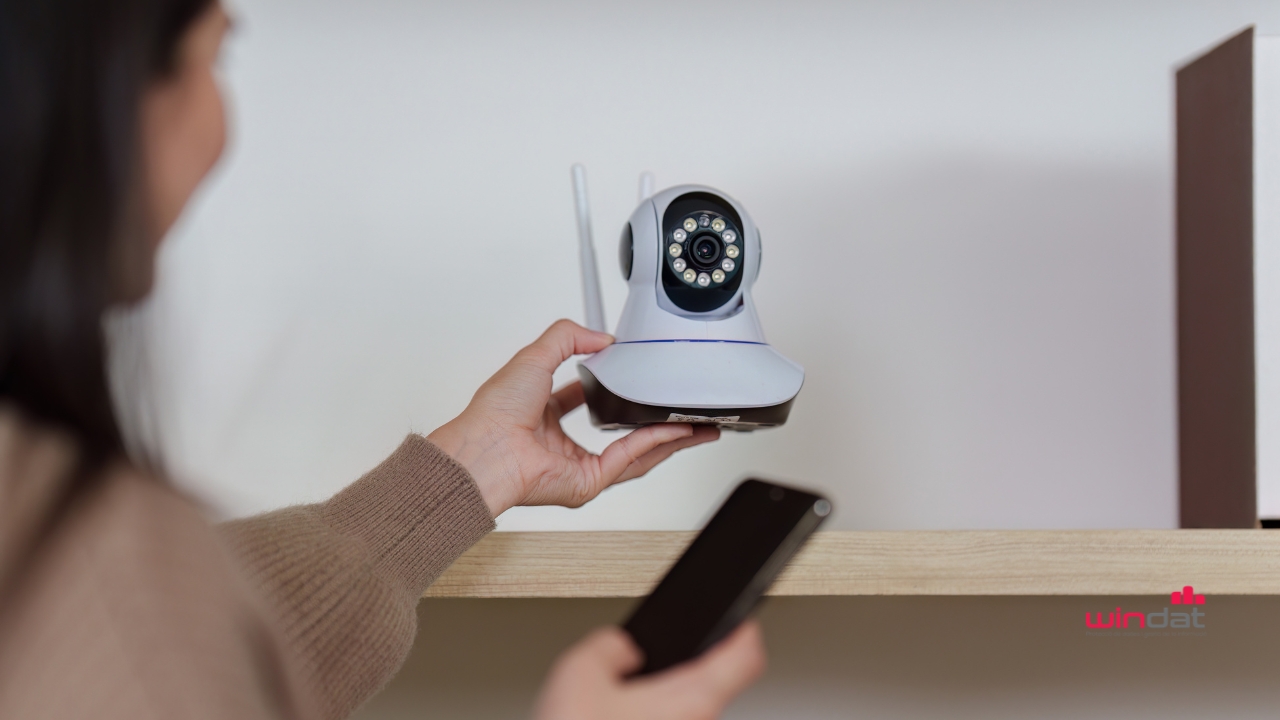
Home technology has entered our homes, often with such laudable intentions as the care and protection of children and the elderly or dependents. However, the installation of surveillance cameras in the family environment has opened up a major legal debate.
The Spanish Data Protection Agency (AEPD) has published a specific guidance guide on this matter that marks a before and after. Until recently, it was considered that what happened inside the home was covered by the domestic exception, a legal area where the GDPR did not apply. But the current reality is very different: when third parties enter the home to work, such as professional caregivers, cleaning staff or physiotherapists, the private space becomes, for legal purposes, a workplace where the fundamental rights of privacy must be guaranteed.
The AEPD document is very clear in its requirements. Any individual who places a camera at home must explicitly inform workers through the official video surveillance poster and a detailed information clause explaining who manages the images and for what purpose. In addition, it is prohibited to capture intimate areas such as toilets or staff rest areas, and access to real-time images must be strictly limited. Nor is it permitted to use these devices to exercise disproportionate or arbitrary labor control.
This new reality raises a key question for the sector: should individuals start hiring data protection consultancy services? The answer is a resounding yes. Ignorance of the regulation does not exempt from compliance, and claims and sanctions from the AEPD are no longer an exclusive risk for large corporations, or even SMEs or self-employed people. An ordinary citizen may find themselves facing a complaint from their parents' caregiver if they feel they are being illegally monitored or if the images are being used improperly.
For companies and privacy consulting professionals, a completely new and unexplored market niche opens up here. It is no longer necessary to advise only the corporate sphere, but to design simplified, affordable and highly educational service packages for families who need clear action protocols, poster templates and informative contracts for their domestic employees. The challenge of privacy in 2026 is no longer delivered in the offices of multinationals, but in the dining room of our homes, where the right to care for a relative must be balanced, with surgical precision, with the right to privacy of the caregiver.